




New School Readiness Groups to be Launched in Georgia’s Regions Under the I2Q Project
School Readiness groups will begin operating in five public schools across the municipalities of Zugdidi, Kutaisi, Zestaponi and Marneuli starting from the Spring of 2026.
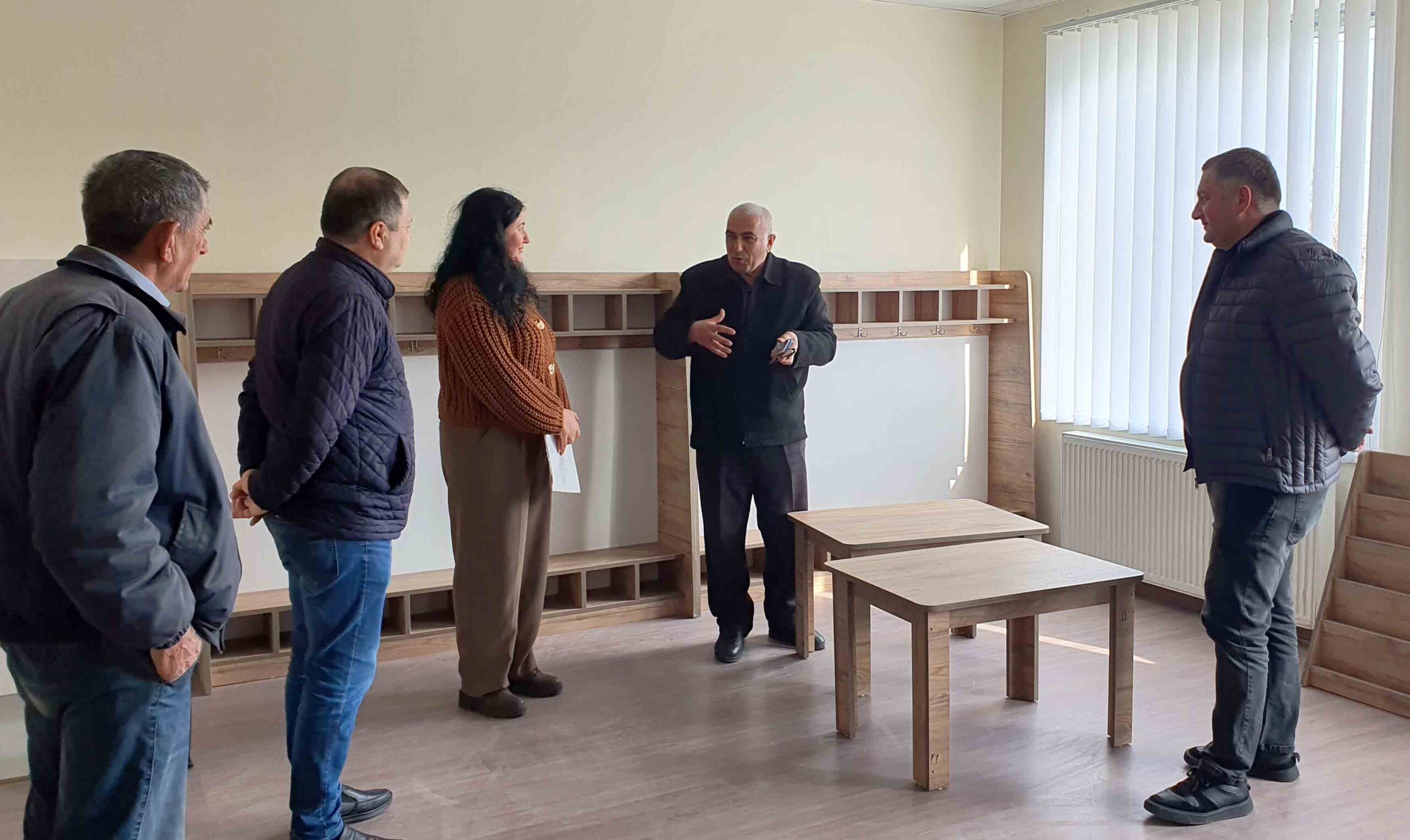
Within the scope of the Early Childhood Education component of the Innovation, Inclusion and Quality Project (I2Q), working visits were conducted to selected schools last week. The ECE Component Lead personally inspected the prepared educational spaces and handed over the necessary inventory and resources to the following schools:
- Zestaponi: Public Schools №6 and Revaz Mumladze Public School №7;
- Zugdidi: Public School №10;
- Kutaisi: Public School №13;
- Marneuli: Pirveli Kesalo Village Public School.
The groups are designed for children aged 5-6 and those older than 6, with a capacity of 15 students per group. Registration will be officially announced starting April, 2026.
During the visit, meetings were held with the heads of the Kindergarten Management Agencies.
“There is high demand in the Marneuli Municipality, so we are delighted to have another group in Pirveli Kesalo Village. Educators note that children who complete the School Readiness program are properly prepared for school and have acquired all the necessary skills,” stated Zaur Karamov, Director of the Marneuli Kindergarten Management Agency.
The meetings also were held with Zoia Leladze, Director of the Zestaponi Kindergarten Management Agency and Lela Grigolaia, Quality Assurance Coordinator of the Zugdidi Kindergarten Management Agency.
The updated program focuses on the holistic development of the child, placing equal importance on social, emotional, motor, and cognitive/research skills. The teaching methodology is based on the “learning by doing” principle, which fosters children’s natural curiosity and creativity.
Under the I2Q Project, the piloting of the School Readiness Program will be fully accessible across 150 schools in Georgia. These activities are carried out with the support of the World Bank and the expert involvement of San Diego State University (SDSU).