



Updated Educational Resources to Create Equal Opportunities for All Children Across the Country
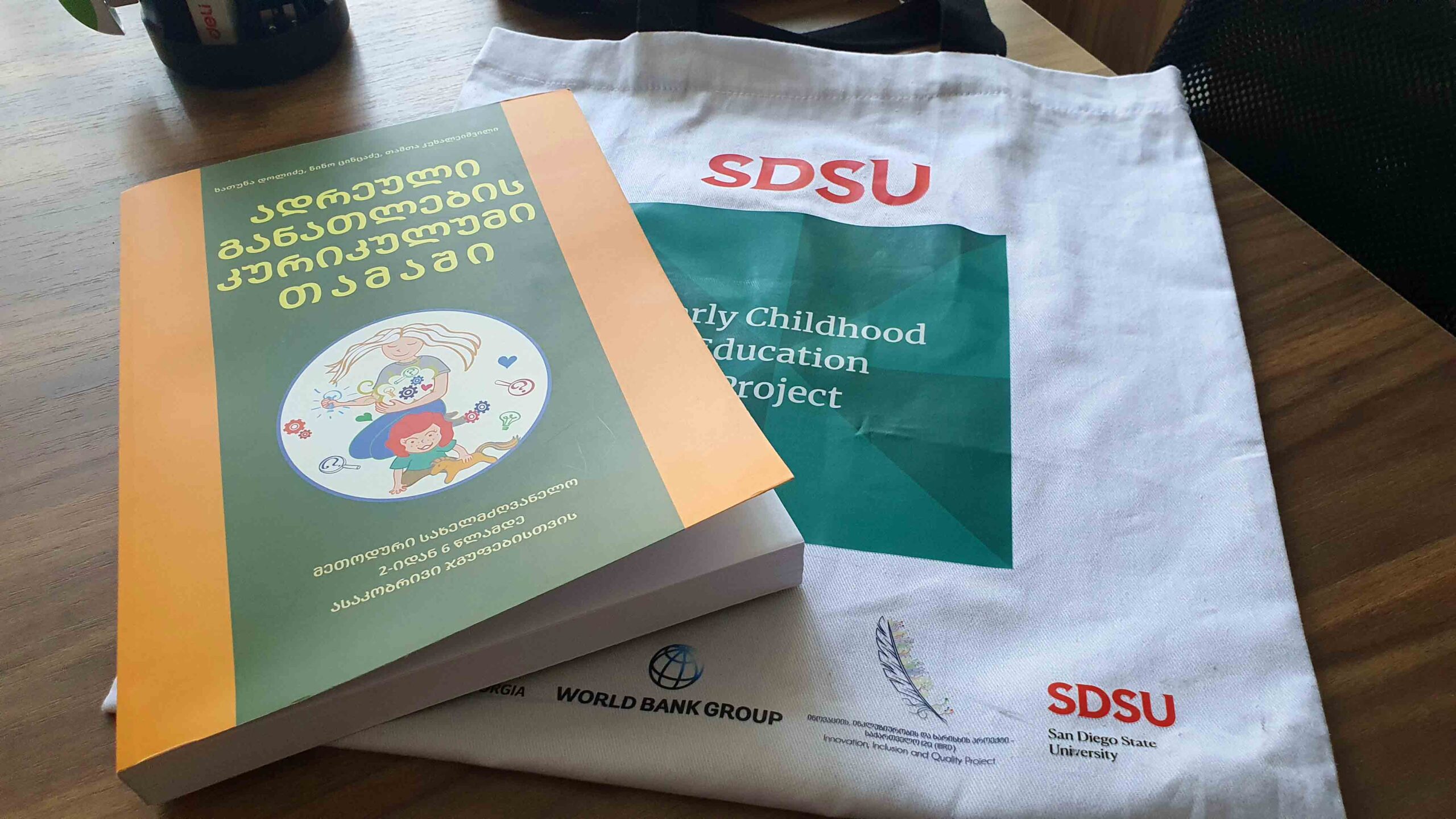
Within the framework of the Early Childhood and Preschool Education component of the Innovation, Inclusion and Quality (I2Q) Project, an updated methodological manual – the Early Childhood Education Curriculum – “Play” has been developed with the support of the World Bank. The primary goal of this updated resource is to enhance the management system of early childhood and preschool education institutions nationwide and to significantly improve the quality of teaching.
The updated curriculum is aligned with the state standards of Child Upbringing and Education, as well as the Quality Standards of the Environment and Teaching-learning Processes.
The manual is based on two core principles: group unity and research-discovery. Its holistic approach prioritizes all areas of child development equally, laying a solid foundation for their future academic and personal success.
The updated methodological manual is designed for use in early childhood education institutions as well as in school readiness groups. The revised school readiness program aims to support the holistic development of children, fostering social, emotional, motor, and research skills, along with curiosity and creativity. It emphasizes experiential learning and values all aspects of a child’s development.
The manual is particularly valuable due to its practical resources, which include updated samples of curricula, real-world practical scenarios, and videos filmed in Georgian kindergartens, showcasing international best practices in a local context.
The refinement of this manual, which began in 2023, was a collaborative effort. Its content was shaped by extensive focus groups involving educators, trainers, parents, and administrative staff, ensuring the resources are both practical and responsive to the needs of the community.
This project was brought to fruition through the invaluable contribution of early childhood education experts from San Diego State University and Institute of Child Development of Ilia State University. On their initiative and in close cooperation with the Ministry of Education, Science and Youth of Georgia, 300 copies of the updated curriculum in Georgian were printed, which have already been sent to all kindergarten associations across the country.
To ensure accessibility, the curriculum is also available digitally via the websites of the National Library of Georgia and the E-House of Education (Teacher’s House).
Additionally, as part of the I2Q Project, the updated curriculum has also been translated into Armenian and Azerbaijani, with printing expected to be completed by the end of 2025.